Latest Posts

Hong Kong-born Artist Paul Chan Wins Prestigious Prize In NY

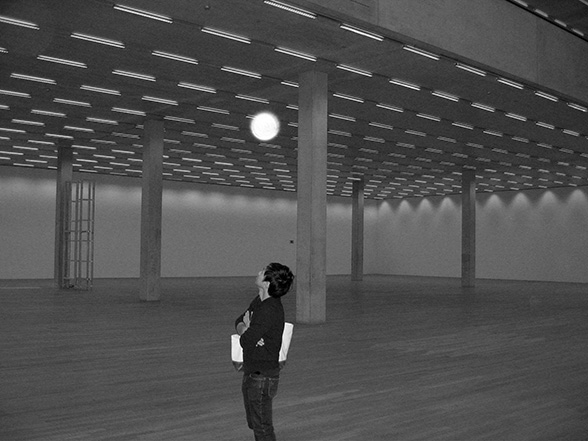
1098_Chan_Schaulager_bw

The artist Paul Chan was awarded the prestigious Hugo Boss prize in New York last week. Initiated in 1996, the prize is awarded every two years to an artist who has made “a significant contribution to the evolution of the contemporary visual arts“.

Paul Chan is prototypical of his generation, exploiting the potential of the World Wide Web and its information overkill to excess, redesigning it and establishing links with goal-oriented, unbridled enthusiasm. He has already created a wide-ranging oeuvre that reveals him to be one of the most inventive and multifaceted practitioners in contemporary art. His studies of current political and social issues, as well as the great and timeless concerns of history, literature, and philosophy, are incorporated into his art with lighthearted verve.

More about Paul Chan http://bit.ly/1xHql3C

Message Personnel

image

Hong Kong. Mon amour.

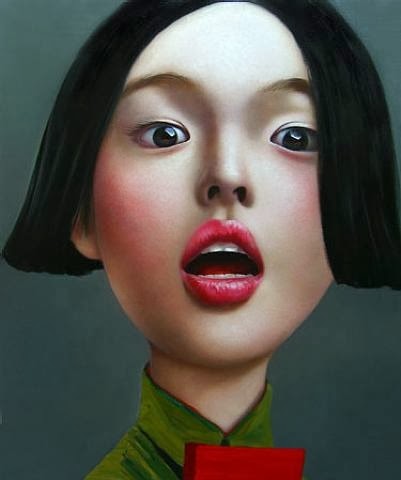
The East is Red by Ling Jian

image

Ling Jian was born in the Shandong Province of China in 1963. He graduated from the Qinghua University Art College and has exhibited his work in Germany, Bangkok, Amsterdam, and Italy. Ling Jian’s art is neither westernized Chinese art nor orientalized western art but a carefully negotiated hybridization calibrated to the artist’s expressive concerns.

More about Ling Jian http://bit.ly/1uELDQI

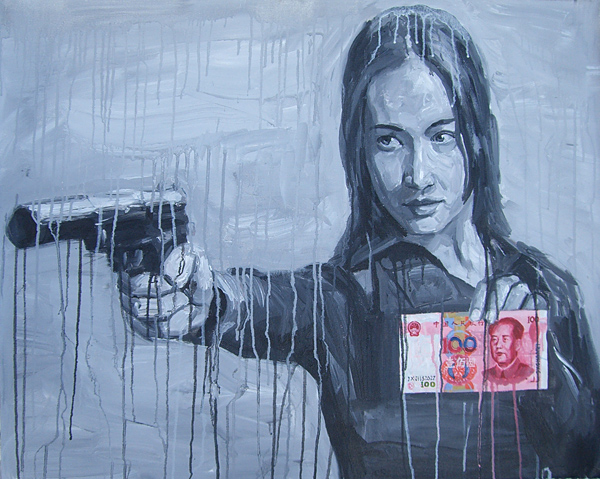
Most Wanted French by Sheng Qi

image

Sheng Qi is a Chinese performance artist and painter. He was one of the original founders of the Chinese performance art group, Concept 21.
In 1989, in protest to the massacre at Tiananmen Square, he severed the pinkie finger of his left hand and buried it in a porcelain flowerpot which remained in Beijing during his subsequent exile in Europe. In 1999 he returned to Beijing but mostly lives in London since 2010. His prevelant themes are the body language and its culture.

All his works are painted in black, grey and red.

More about Sheng Qi at http://bit.ly/1Aev9Dm

The Geography Of Innovation Is Shifting

When a prominent venture capitalist of California invested one billion dollars in high risk green technology, Silicon Valley recalled the world that in innovation, geography is karma. What Vinod Khosla’s story tells us is that location is crucial when dealing with innovation and technology. Thirty years earlier Vinod left India to study management at Stanford University in California. In 1981, fresh out, he founded Sun Microsystems, a computer manufacturer .

Innovations do not occur anywhere but often in geographic clusters where investors, large research universities, existing technology companies, engineers, designers, artists and scientists are always willing to think outside the box.

Those people are part of what Richard Florida calls the Creative Class. His paradigm asserts that innovation is the outcome of creativity, this latter being the outcome of human creation for a concrete realization which then might lead to innovation. As far as geography and clusters are concerned, the Silicon Valley has been for several decades considered as the only creative and innovative hub worldwide. This is clearly changing.

The geography of innovation is shifting. For proof, start with Google, which over the past ten years has taken the core R&D and innovation-oriented activities it once housed only in Silicon Valley and extended them into other cities. The company’s presence in London’s Tech City, New York City’s Chelsea district, and Pittsburgh’s Bakery Square reflects management’s calculation that being in cities increases the company’s access to growing tech-oriented ecosystems, advanced research institutions, deep pools of talent, and distinct regional specializations.

Bruce Katz and Julie Wagner define these districts as “geographic areas where leading-edge anchor institutions and companies cluster and connect with start-ups, business incubators, and accelerators. Compact, transit-accessible, and technically-wired, innovation districts foster open collaboration, grow talent, and offer mixed-used housing, office, and retail.”

This urban shift is evident in the rise of great urban centers like New York, London, Paris, Berlin, Beijing, Shanghai and Tokyo as important startup hubs. China is also evolving into something much more than world’s factory, with 26 billion-dollar startups along its East Coast, running from Beijing to Shanghai to Guangzhou. Most of all, the location of uber-successful startups is incredibly concentrated and clustered in a small number of the world’s largest and most advanced cities in North America, Western Europe and Eastern Asia.

For Richard Florida, the confluence of these disruptive economic, social and demographic dynamics has changed corporate calculus. As companies design forward-looking strategies, they should be asking whether and how a greater commitment to urban locales could help them to squeeze out even more success.

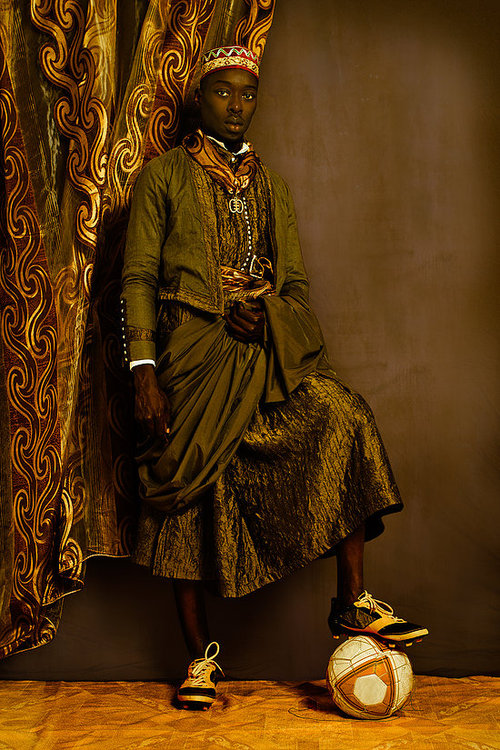
Diaspora by Omar Victor Diop

image

New work from Omar Victor Diop, the Senegalese photographer behind the striking [re-] Mixing Hollywood (Onomollywood), Le Futur du Beau and Le Studio des Vanités projects, is always a cause for excitement. The artist cimes back this month with a photo series at the 1:54 Contemporary African Art Fair in London. In a twelve-image set titled Project Diaspora, Diop showcases his penchant for vibrant colors and highly stylized portraits while again delving into the conversation about representation of Africans on the world stage.

See more at http://bit.ly/1we57i5

China by Chen Jiagang

Chen Jiagangchen_jiagang_smog_city_7

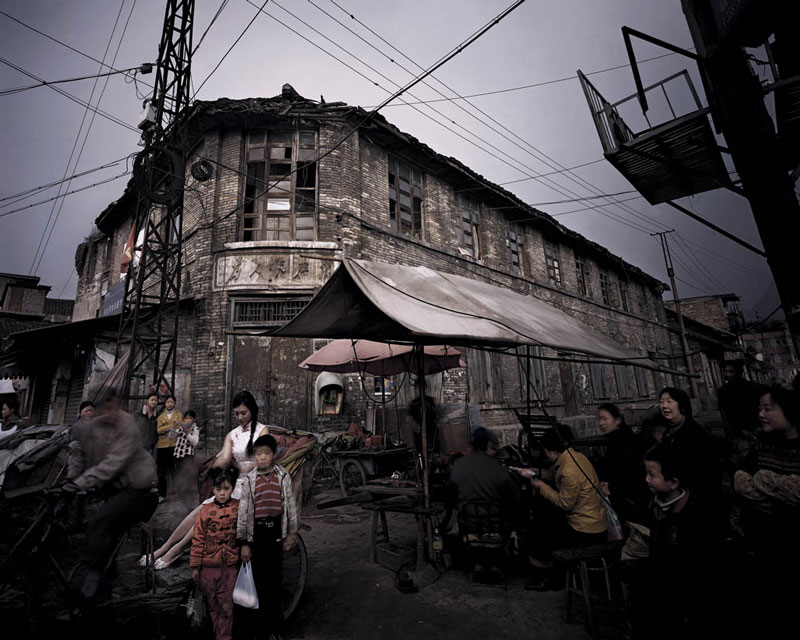
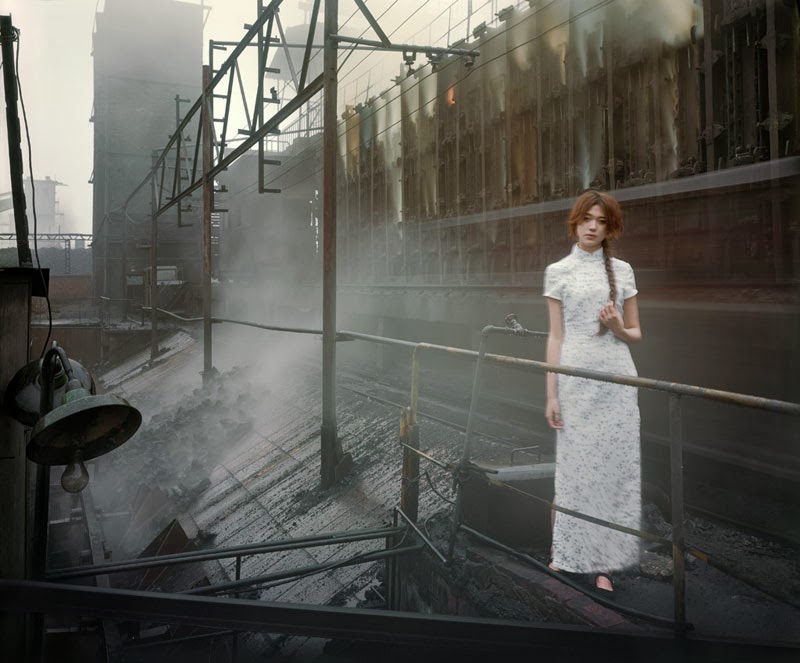
Former architect and museum director, Chen Jiagang offers dazzling works mixing documentary and staged photography. His pictures paint the urban and social upheavals of contemporary China without artifice and with an undeniable subjectivity.

Ruined cities, disfigured landscapes, abandoned factories or renaissance, scenes with deceptive appearances, all these places full of history and uncertainty are both documented and reinvented. He loves indeed to populate this apparent urban chaos with delicate female presences. Chen Jiagang captures the echo of a past life, of a forgotten memory with a necessary awareness.

More about Chen Jiagang http://bit.ly/1uphPck

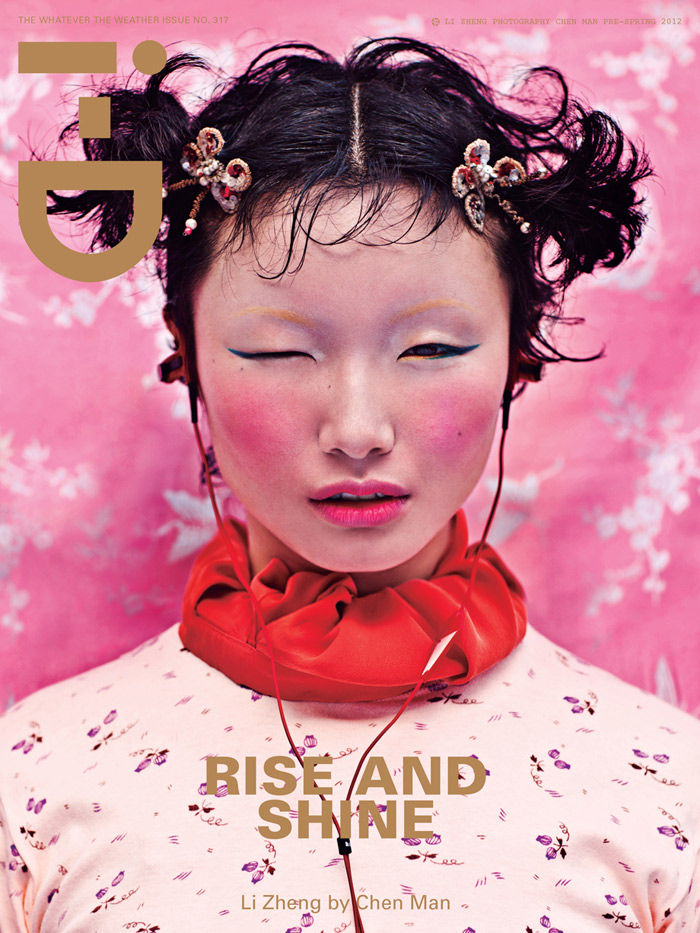
Li Zheng by Chen Man

image

Chen Man is a Chinese fashion photographer who has produced numerous covers for Chinese and international fashion magazines and for major international companies. Her photos are widely exhibited globally.

More about Chen Man http://bit.ly/1wz5l0I