Latest Posts

Won Sou-Yeol: The Art Of Korean Abstraction

won sou-yeol

Based in France since 1984, Won Sou-Yeol was born in a small town on the island of Chejudo in South Korea. This place between land and sea has nurtured her inspiration through the strength of the natural elements, which are to be found in her painting. Her work is imbued with dynamism and power marked by the contrast between black and white, light and shadow. Master of calligraphy, she mixes her technical spontaneity with a large and concentrated gesture. Like a dance where cracks and splashes are created.

“I kept my strength. I was not talking to anyone. I was not sleeping. “.

The work and the artist are one. Won Sou-Yeol is devoted entirely to her art. At the point that she said that one day, while she was painting, she wanted to look at the clock. Three years had elapsed. Won Sou-Yeol wants to free herself of something that belongs to her. Her work is a weapon of freedom both strong and light. It enables to access the immaterial world that fascinates her.

The painting of Won Sou-Yeol expresses movement. Using different tools she produces a canvas, both heavy and light with raw and living material. This is the art of calligraphy that is shaped by a light brush stroke. This creation process is revealed mostly by contrasting with the dynamism and the apparent quick creation that emerges.

“It took me a long time, long time (…) At least three years.”

We find in the work of Won Sou-Yeol the principles of abstract expressionism . She is often associated with artists such as Hartung or De Kooning and cites Kline as one of the artists who most influenced her. Their works are defined by spontaneous and intense movement. Kline, as Won Sou-Yeol, uses the canvas as an essential element of the work composition. Both work in black and white and are inspired by the art of calligraphy. Won Sou-Yeol is sometimes associated with lyrical abstraction which Hartung is one of the precursors.

Her painting is mineral and her gestures, footprints of a calligraphic abstraction.

More about Won Sou-Yeol http://bit.ly/1Thd6BU
 

Wikibuilding: The User-Generated Urbanism

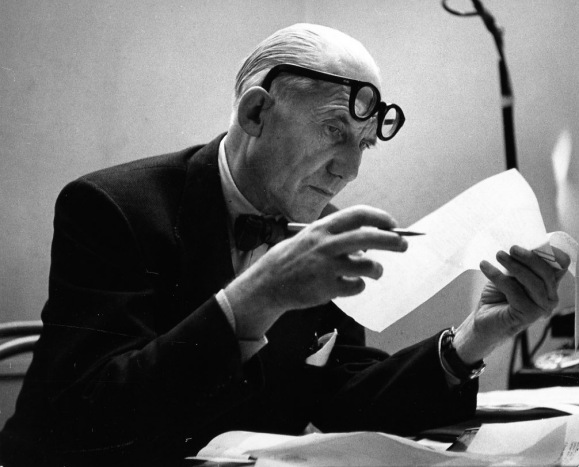
Robert-Doisneau-Le-Corbusier-20-octobre-1953

The topic is not really new. At the end of the 2000s,  some sociologists and urban planners had prefigured the emergence of a “city 2.0” referring to the emergence of collaborative practices on the Internet: blogs , Wikipedia and maps that made digital more prevalent in our cities.

Even though collaborative planning is not necessarily linked to digital, the consultation process is now common for most urban projects. Thereforce, user-generated urbanism might be the future of cities.

In France, the phenomenon has reached a new level with the birth of Wikibuilding. The building would be designed within a wiki process, all plans and experimentations being open source. Any citizen would be able to draw, to use, to improve or to test the building. Promoters or insurers would test the wikibuilding with residents, real estate agencies and 5% of the area would be reserved for a living Lab. Wikibuilding would be a place for experimentation and open to the architecture schools in order to design and include continuous Open Design updates. The Paris School of Architecture is already working with wikibuilding.

Is wikibuilding the future of architecture, like Le Corbusier was one day?
Dedicated to providing better living conditions for the residents of crowded cities, Le Corbusier was influential in urban planning and a founding member of the Congrès international d’architecture moderne (CIAM). Corbusier prepared the master plan for the planned city of Chandigarh in India, and contributed specific designs for several buildings all around the world.

In the 1930s, Le Corbusier expanded and reformulated his ideas on urbanism in La Ville radieuse (The Radiant City). In the Radiant City, Le Corbusier abandoned the class-based stratification: housing was now assigned according to family size and not economic position. Le Corbusier challenged architecture and capitalism.

Wikibuilding is designed according to and by users.

Will Wikibuilding be as powerful as Le Corbusier?

Picture by Robert-Doisneau (1953)

The French May presents the first major retrospective about Le Corbusier in Hong Kong. This exhibition will present the modern genius in a new light http://bit.ly/1LU1Hpu

Hong Kong: Inside Zhu Jinshi’s Boat

image

Born in Beijing in 1954, Zhu Jinshi moved to Germany in the mid-1980s, and at present lives and works in Beijing. Zhu began painting abstract works in the late 1970s, and participated in the Stars group exhibition, the first avant-garde art exhibition held after the Cultural Revolution. The core of Zhu’s artistic practice is most fittingly characterized by traditional Chinese aesthetics, which emphasises the harmony between human beings and the natural world.

Part of the legendary generation of artists who left China in the 1980s, Zhu Jinshi was clearly marked by his move to another country and culture. He used contemporary Western art languages to find the contemporary possibilities in the cultural resources and materials of China.

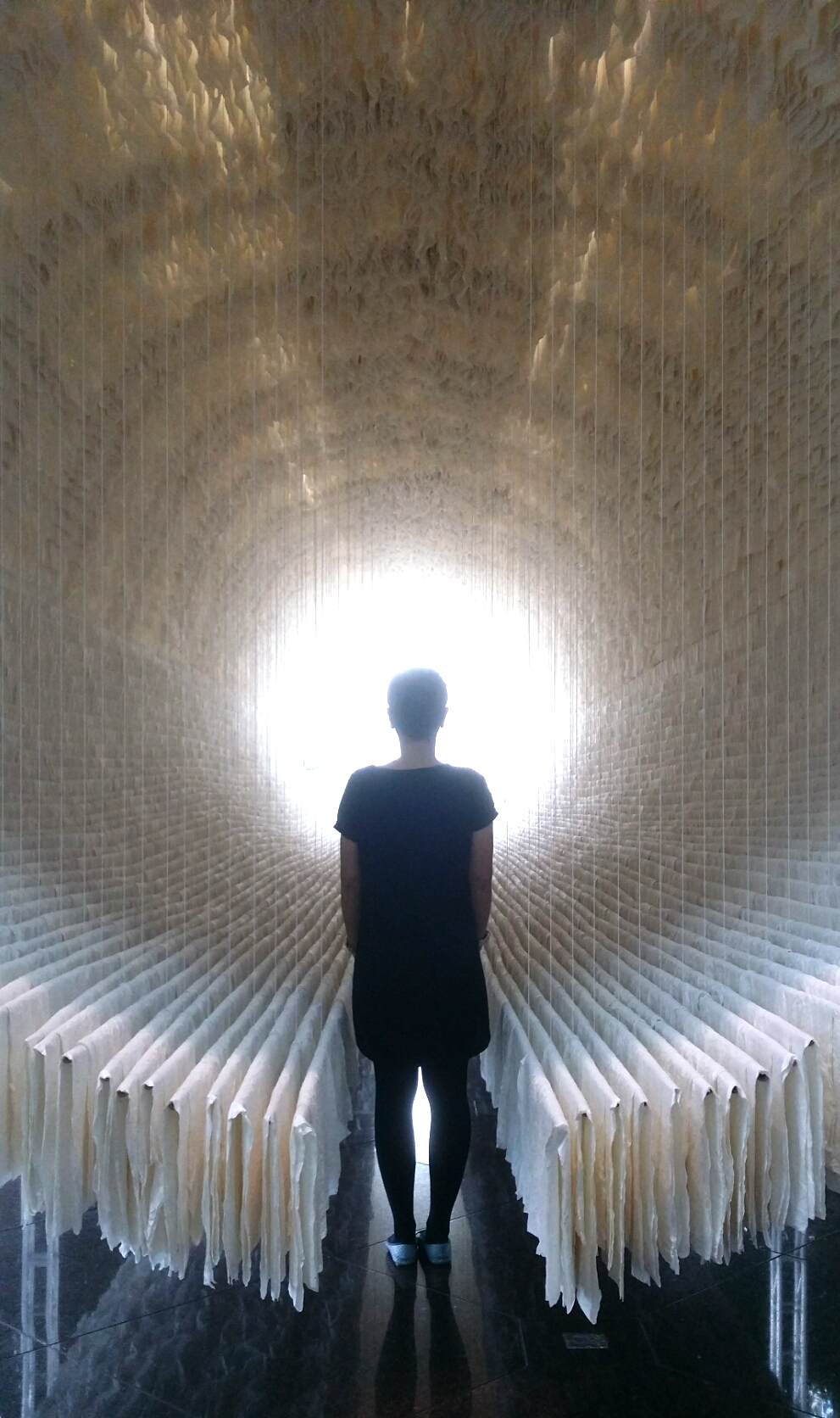
At Exchange Square in Hong Kong, visitors are immediately greeted by Zhu Jinshi’s monumental Boat. Bamboo, cotton and 8,000 sheets of pale white Xuan (rice) paper meticulously hang from the ceiling, forming a spherical tunnel and stopping just before touching the ground. “I used materials, thoughts, and traditions of the East as a tool to go against the power of West-Centrism,” Zhu says.

Using Xuan paper—a material laden with Chinese history and tradition—Zhu creates a symbolic representation of a boat. But more than a boat, the 12-meter long installation also represents a journey. “He challenges the audience to think,” says Zhu’s gallerist, Pearl Lam. ” Why do you have to walk into this boat? Because whenever you walk in you feel very spiritual. It’s like an enlightenment.”

When moving through the installation, the outside world is quieted. Noise is muted, and light is dulled. One’s movement through the tunnel becomes a representation of a boat’s journey, of the drifting and mixing of cultures.

“Globalization is manufacturing a homogenous culture, and this makes people think about cultural identity,” Lam explains. “For him, sculpture and installation are very Western, so he is [trying] to bridge between the West and Asia.”

Rather than a logical analysis, summarization or expression of individual emotions, the artist characterizes his work as “mind images” produced by the complete comprehension of a given phenomenon. He believes that his perception and understanding of the world can be fittingly expressed only through sustained contact and dialogue with materials. It is through this process that these materials act as vehicles for his inner spirituality.

The Rotunda, Exchange Square, Central, Hong Kong

Presented by Pearl Lam Galleries and Hongkong Land, 09 March 2015 – 31 March 2015, Monday to Sunday, 9 am – 7 pm

The Geography Of Innovation Is Shifting

When a prominent venture capitalist of California invested one billion dollars in high risk green technology, Silicon Valley recalled the world that in innovation, geography is karma. What Vinod Khosla’s story tells us is that location is crucial when dealing with innovation and technology. Thirty years earlier Vinod left India to study management at Stanford University in California. In 1981, fresh out, he founded Sun Microsystems, a computer manufacturer .

Innovations do not occur anywhere but often in geographic clusters where investors, large research universities, existing technology companies, engineers, designers, artists and scientists are always willing to think outside the box.

Those people are part of what Richard Florida calls the Creative Class. His paradigm asserts that innovation is the outcome of creativity, this latter being the outcome of human creation for a concrete realization which then might lead to innovation. As far as geography and clusters are concerned, the Silicon Valley has been for several decades considered as the only creative and innovative hub worldwide. This is clearly changing.

The geography of innovation is shifting. For proof, start with Google, which over the past ten years has taken the core R&D and innovation-oriented activities it once housed only in Silicon Valley and extended them into other cities. The company’s presence in London’s Tech City, New York City’s Chelsea district, and Pittsburgh’s Bakery Square reflects management’s calculation that being in cities increases the company’s access to growing tech-oriented ecosystems, advanced research institutions, deep pools of talent, and distinct regional specializations.

Bruce Katz and Julie Wagner define these districts as “geographic areas where leading-edge anchor institutions and companies cluster and connect with start-ups, business incubators, and accelerators. Compact, transit-accessible, and technically-wired, innovation districts foster open collaboration, grow talent, and offer mixed-used housing, office, and retail.”

This urban shift is evident in the rise of great urban centers like New York, London, Paris, Berlin, Beijing, Shanghai and Tokyo as important startup hubs. China is also evolving into something much more than world’s factory, with 26 billion-dollar startups along its East Coast, running from Beijing to Shanghai to Guangzhou. Most of all, the location of uber-successful startups is incredibly concentrated and clustered in a small number of the world’s largest and most advanced cities in North America, Western Europe and Eastern Asia.

For Richard Florida, the confluence of these disruptive economic, social and demographic dynamics has changed corporate calculus. As companies design forward-looking strategies, they should be asking whether and how a greater commitment to urban locales could help them to squeeze out even more success.

Questioning The Definition Of Startup

Steve Jobs often spoke of Apple “startup culture” and the New York Times referred to the airline Virgin America as “a startup”.

Today any small company operating in the digital industry tends to be defined as a startup. Hence confusion in perception, consistence and business models in the startup scene worldwide.

Steve Blank, one of the most influential people in Tech and teacher at Stanford, defines a startup as “an organisation formed to search for a repeatable and scalable business model”. The key attribute is not to be a tech company. Neither to be a small company using digital and/or operating on the Internet. The key attribute is a repeatable and a scalable business model.

In recent years, popular lexicon has begun equating startups with tech companies, as though the two are inherently intertwined. But let’s face it. Is Uber with a valuation record of $17bn still a startup or rather a multinational logistics company which generated $213 million revenue in 2013?

Mark Babbitt, CEO at YouTern, an online community focusing on careers management, expanded Steve Blank’s definition stating a startup is “an entrepreneurial-driven organisation formed to search for a repeatable and scalable business model”. The Entrepreneur enters into the equation.

Eric Ries, founder of the Lean Startup Movement, included an entrepreneurial management paradigm for new ventures. Inspired by the Japanese car manufacturer Toyota, Lean thinking has radically altered the way supply chains and production systems are run. The Lean Startup is conceived as an entrepreneurial management assess tool through a validation learning process based upon Customer Development.

For Eric Ries, if according to Steve Blank’s definition a startup is an organisation it thus requires tailored management tools specifically geared to its context of extreme uncertainty. The Lean Startup addresses this issue.

A startup may also be defined as an innovative venture. Does a startup need to be innovative or disruptive to be qualified as a startup? Innovation or disruption are not conditions per se but are likely induced by the scalable and repeatable business model requirement. Innovation and disruption enable critical growth and scalability but are not mandatory to be qualified as a startup.

So, what constitutes a startup? A repeatable and scalable business model? An entrepreneurial-driven organisation? A company that handles extreme uncertainty? A new entrepreneurial management paradigm for innovative ventures?

What do you think?

Innovation > Debunking Public vs. Private Sector Myths

Common sense in Economics claims that the role of the State is to overcome market failures and protect competition. According to this, public intervention is not justified unless private agents are unable to produce a satisfactory outcome for all. The drive for initiative and dynamism would belong to the private sector, whereas the State unduly protects special interests, produces absurd and penalizing regulations for entrepreneurship by wasting resources that could be better used by private firms.

These arguments emerge regularly in discussions on innovation and disruption. The “Knowledge Economy” has produced a Schumpeterian Hero. The Entrepreneur has become the central pivot of economic development by taking risks to create new products and jobs that require Venture Capital and a light regulatory framework. This entrepreneurial culture has fostered the development and the myth of the Silicon Valley.

In a recent study (1), Mariana Mazzucato, Professor of Economics of Innovation at the University of Sussex, shows how this myth of the Silicon Valley propagates a distorted view of the respective roles of the public sector and private firms in the innovation process. Because the genuine Entrepreneur taking risks and exploring unknown territories in the Internet, Nanotechnologies or Biotechnologies has always been the public sector.

There are no radical innovation in which the State has not played a leading role, not only as funder of the basic research, but also as an innovator. Venture capital is assumed to be the essential ingredient of innovation in the myth of the Silicon Valley. But VC always intervenes after previous public investments and when technological risks have significantly decreased whereas profit opportunities have increased accordingly.

Private firms regularly benefit from what the public research has previously discovered. A striking example is the Apple iPhone. Actions and funding from the State can actually be found in all patents that make this smartphone “smart”.

Between 1993 and 2004, 75% of new molecular entities approved in the US were issued from public research.

Would the Silicon Valley be this innovation Lab without the needs in telecommunications and transistors of the US Navy in San Francisco? What history, data and figures teach us has nothing to do with myth of young entrepreneurs starting from scratch in their garage. The Dark Matter created by the public sector was accessible and ready to be transformed into a viable business model.

The reality is that Innovation raises from ecosystems where public sector and private companies are co-operators and co-creators.

Industrial and innovation policies drawing the consequences of this observation should give public intervention a central place, nor as a proof of market failures or a guardian of free competition, but as creator of innovative and disruptive technologies.

 (1) “The Entrepreneurial State. Debunking Public vs. Private Sector Myths “, Anthem Press, London