Latest Posts

Wikibuilding: The User-Generated Urbanism

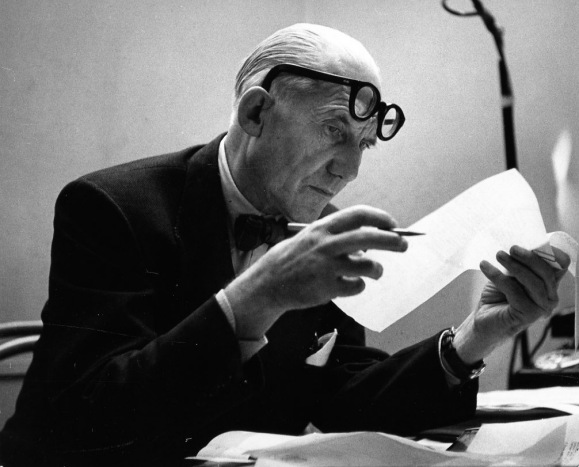
Robert-Doisneau-Le-Corbusier-20-octobre-1953

The topic is not really new. At the end of the 2000s,  some sociologists and urban planners had prefigured the emergence of a “city 2.0” referring to the emergence of collaborative practices on the Internet: blogs , Wikipedia and maps that made digital more prevalent in our cities.

Even though collaborative planning is not necessarily linked to digital, the consultation process is now common for most urban projects. Thereforce, user-generated urbanism might be the future of cities.

In France, the phenomenon has reached a new level with the birth of Wikibuilding. The building would be designed within a wiki process, all plans and experimentations being open source. Any citizen would be able to draw, to use, to improve or to test the building. Promoters or insurers would test the wikibuilding with residents, real estate agencies and 5% of the area would be reserved for a living Lab. Wikibuilding would be a place for experimentation and open to the architecture schools in order to design and include continuous Open Design updates. The Paris School of Architecture is already working with wikibuilding.

Is wikibuilding the future of architecture, like Le Corbusier was one day?
Dedicated to providing better living conditions for the residents of crowded cities, Le Corbusier was influential in urban planning and a founding member of the Congrès international d’architecture moderne (CIAM). Corbusier prepared the master plan for the planned city of Chandigarh in India, and contributed specific designs for several buildings all around the world.

In the 1930s, Le Corbusier expanded and reformulated his ideas on urbanism in La Ville radieuse (The Radiant City). In the Radiant City, Le Corbusier abandoned the class-based stratification: housing was now assigned according to family size and not economic position. Le Corbusier challenged architecture and capitalism.

Wikibuilding is designed according to and by users.

Will Wikibuilding be as powerful as Le Corbusier?

Picture by Robert-Doisneau (1953)
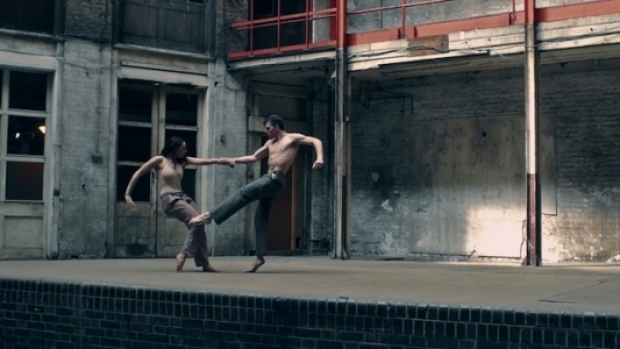
The French May presents the first major retrospective about Le Corbusier in Hong Kong. This exhibition will present the modern genius in a new light http://bit.ly/1LU1Hpu

Intimité.

image
Read More

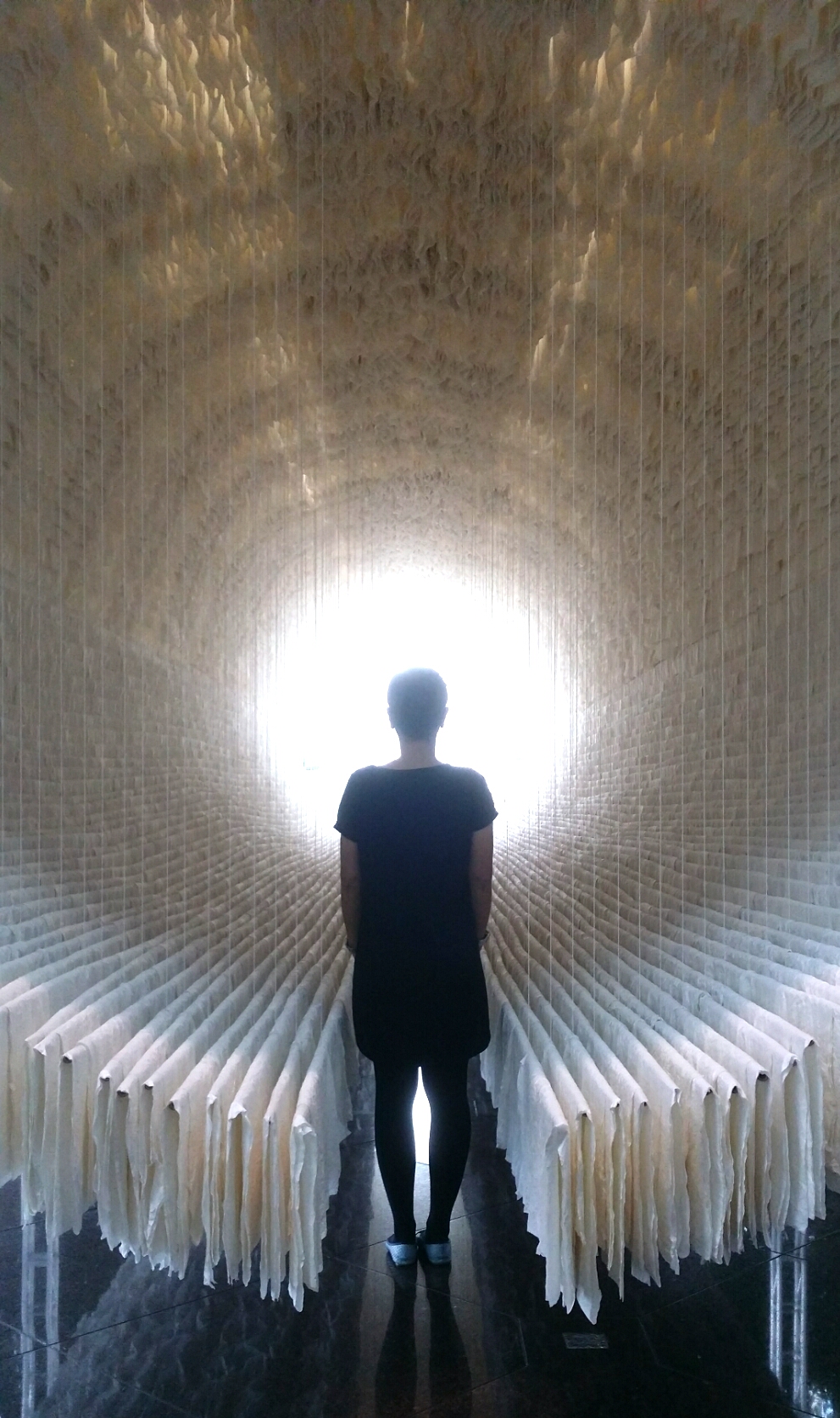
Hong Kong: Inside Zhu Jinshi’s Boat

image

Born in Beijing in 1954, Zhu Jinshi moved to Germany in the mid-1980s, and at present lives and works in Beijing. Zhu began painting abstract works in the late 1970s, and participated in the Stars group exhibition, the first avant-garde art exhibition held after the Cultural Revolution. The core of Zhu’s artistic practice is most fittingly characterized by traditional Chinese aesthetics, which emphasises the harmony between human beings and the natural world.

Part of the legendary generation of artists who left China in the 1980s, Zhu Jinshi was clearly marked by his move to another country and culture. He used contemporary Western art languages to find the contemporary possibilities in the cultural resources and materials of China.

At Exchange Square in Hong Kong, visitors are immediately greeted by Zhu Jinshi’s monumental Boat. Bamboo, cotton and 8,000 sheets of pale white Xuan (rice) paper meticulously hang from the ceiling, forming a spherical tunnel and stopping just before touching the ground. “I used materials, thoughts, and traditions of the East as a tool to go against the power of West-Centrism,” Zhu says.

Using Xuan paper—a material laden with Chinese history and tradition—Zhu creates a symbolic representation of a boat. But more than a boat, the 12-meter long installation also represents a journey. “He challenges the audience to think,” says Zhu’s gallerist, Pearl Lam. ” Why do you have to walk into this boat? Because whenever you walk in you feel very spiritual. It’s like an enlightenment.”

When moving through the installation, the outside world is quieted. Noise is muted, and light is dulled. One’s movement through the tunnel becomes a representation of a boat’s journey, of the drifting and mixing of cultures.

“Globalization is manufacturing a homogenous culture, and this makes people think about cultural identity,” Lam explains. “For him, sculpture and installation are very Western, so he is [trying] to bridge between the West and Asia.”

Rather than a logical analysis, summarization or expression of individual emotions, the artist characterizes his work as “mind images” produced by the complete comprehension of a given phenomenon. He believes that his perception and understanding of the world can be fittingly expressed only through sustained contact and dialogue with materials. It is through this process that these materials act as vehicles for his inner spirituality.

The Rotunda, Exchange Square, Central, Hong Kong

Presented by Pearl Lam Galleries and Hongkong Land, 09 March 2015 – 31 March 2015, Monday to Sunday, 9 am – 7 pm

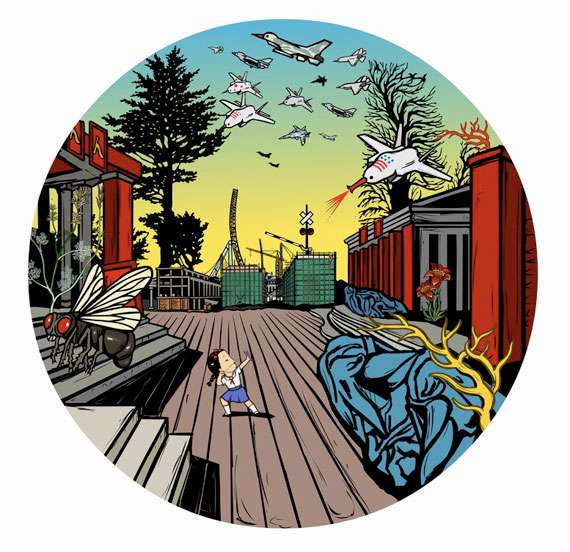
Bu Hua: Beijing Babe Loves Freedom

image

Bu Hua born in 1973 is a female Chinese artist. In her strong imagery and flat, decorative backgrounds there is a trace of the traditional woodblock prints of the revolutionary period, and also her love of Japanese art and design. Often described as a pioneer of digital animation in China, Bu Hua was one of the first to use animation software in an art context, creating surreal narratives about contemporary life. Her animations and still images often feature a feisty, sassy pigtailed child dressed in the uniform of the Young Pioneers, a Communist Party youth group. A clever combination of innocence and knowing, cuteness and cunning, playfulness and cynical parody through a characteristically crisp graphic style creates an allegory of industrialisation, pollution and militarisation. Her heroine, armed only with a slingshot, takes aim at flocks of white birds which prove, on closer examination, to be military aircraft.

More about Bu Hua http://bit.ly/1BAxKsH

La Négresse Blanche by Brancusi

image

Brancusi’s art focused not only on the medium and form of his sculptures, but also on the relationships between his works and the light and space around them. His atelier became the site of groundbreaking experimentation, as he regularly combined and recombined the component parts of individual works and rearranged their placement within groups. The complete ensemble of Brancusi’s White Negress unites the natural elements of stone and wood into an exploration of modern, abstract form, weight, and mass balanced with great lightness and delicacy.

More about Constantin Brancusi http://bit.ly/1ugZjOy

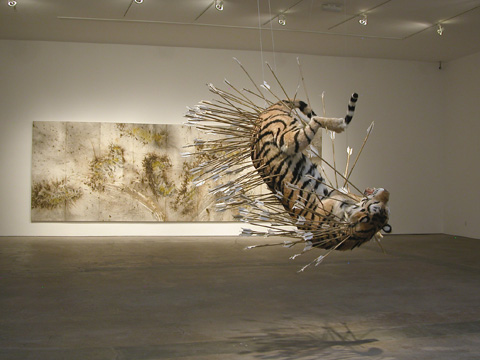
Gunpowder & Tiger by Cai Guo-Qiang

image

Cai Guo-Qiang was born in 1957 in Quanzhou, Fujian Province, China. His father, Cai Ruiqin, was a calligrapher and traditional painter who worked in a bookstore. As a result, Cai Guo-Qiang was exposed early on to Western literature as well as traditional Chinese art forms.

As an adolescent and teenager, Cai witnessed the social effects of the Cultural Revolution first-hand, personally participating in demonstrations and parades himself. He grew up in a setting where explosions were common, whether they were the result of cannon blasts or celebratory fireworks. He also “saw gunpowder used in both good ways and bad, in destruction and reconstruction”. It seems that Cai has channeled his experiences and memories through his numerous gunpowder drawings and explosion events.

More about Cai Guo-Qiang http://bit.ly/1jl0kT6

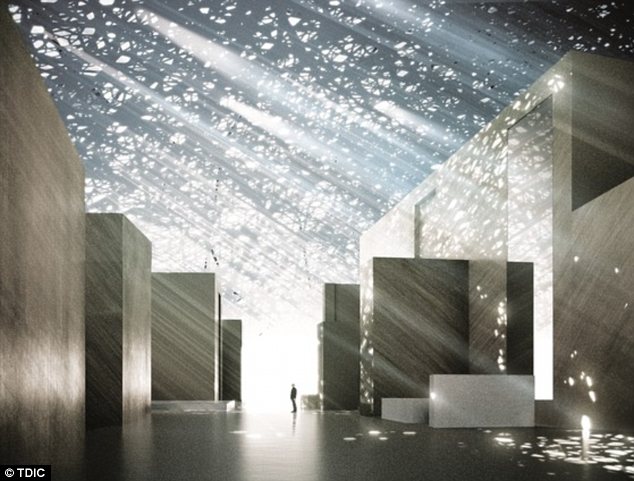
Louvre Abu Dhabi: Can Museums Be Exported?

louvre abu dhabi 1

Abu Dhabi has a new cultural center on the island of Saadiyat. Importing the expertise of the most recognized institutions, the city brands its image as universal and global. The most famous architects of the post-modernist era such as Jean Nouvel have been selected and are at the source of this new branding approach. Lack of knowledge and experience in creating cultural institutions led the Arabian power to collaborate with the Louvre, the Guggenheim Museum and the British Museum. As a result, a collection belonging to the Louvre was moved to Abu Dhabi for a summer exhibition. The Louvre Abu Dhabi is born.

However, this does pose questions. The issue of exporting culture has become crucial as our world becomes increasingly fragmented since global. Can culture be exported? Can art be read in a foreign context regardless its place of creation? For some experts, separate artistic creation from its nation of origin would lead to eliminating its sense and integrity whereas on the other hand, some institutions such as the Guggenheim Museum highlights the history of avant-garde through museums perceived as worldwide museums.

The notion of national artistic identity has evolved and museums are no longer built under a national framework or a national curation process. While the Louvre was the first museum to gather the artistic creations of all Europe, the 21st century is placed under the sign of cross-culturality and cross-fertilization. Globalisation enables art and culture to be shared and portable. Anywhere.

Abu Dhabi is an example of this phenomenon. The future Louvre Abu Dhabi is defined as a universal museum in the Arab world. Its very name is testament to what is an unprecedented alliance between the United Arab Emirates and France, through one of the highest level of cultural cooperation ever created between two sovereign countries. This unprecedented gesture establishes a long and solid relationship between the Musée du Louvre, the greatest museums located in Paris, and Abu Dhabi, which is a dynamic force in the contemporary world. Louvre Abu Dhabi, an innovative and ambitious project, is intended to be a place of discovery, exchange and education. It will also play an important social role in the United Arab Emirates. In this respect, it aims at being seen as a product of the 18th century Enlightenment in Europe. This movement gave birth to the principle of the encyclopaedic and universal museum housing diverse collections of artworks for the purposes of public display and scientific study. One facet of the Louvre Abu Dhabi’s vocation will be to form a shared universal memory. The dialogue between artworks, sculptures and objects would allow visitors to discover shared influences and mutual historical connections between different cultures around the globe, giving insight into the history of humankind since the beginning of time. The aim is to avoid the isolation of cultures and disciplines in order to offer a comprehensive history of art, providing an alternative to the particular vision of the world that has long been proposed by museums.

Other interesting issues would be can Art or a museum be a trademark? Can Art as a trademark be an economic leverage for cities wishing to expand either their influence or their image worldwide? Bilbao has certainly an answer as the Guggenheim museum has taken a tremendous part into the cultural and economic boom of the Spanish city.

Nevertheless, the difference between Guggenheim Bilbao and Louvre Abu Dhabi is that the Louvre is a public institution mainly funded by the French State. The agreement between Abu Dhabi and The Louvre is therefore clearly a revolution in a country where lexception culturelle and public grants are the rules.

Untitled by Lu Guang

Pollution in China

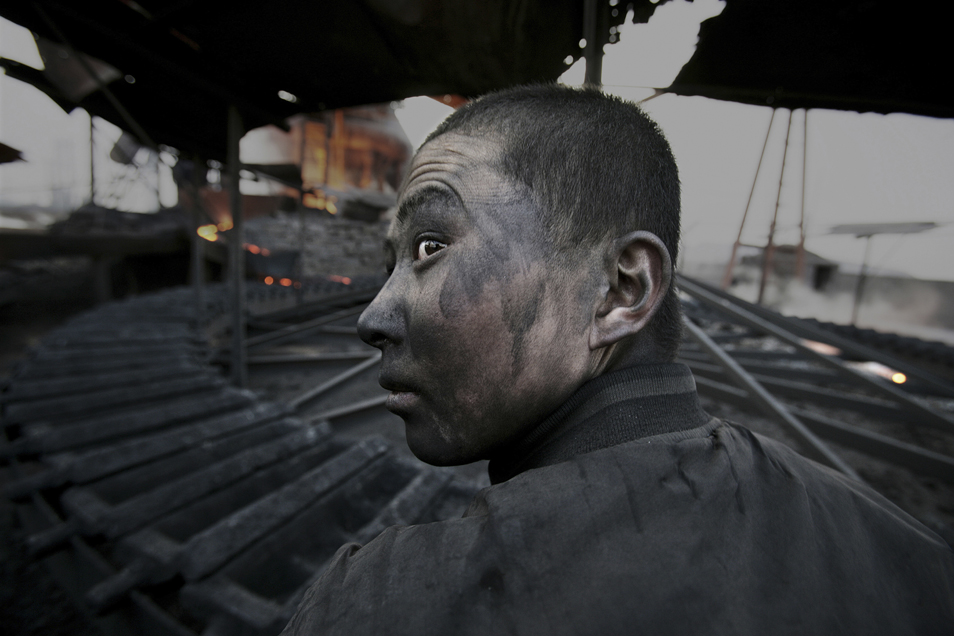
Lu Guang’s work covers a wide range of consequences due to China’s rapid industrialization. A reoccurring theme is that of ‘cancer villages’ in certain affected provinces, the negative environmental conditions such as water pollution and the effect of industrialization on Chinese countrysides and its people.

Guang has stated that his choice of subjects is done to raise awareness in both China and on a global scale.

More about Lu Guang http://bit.ly/1twa0wj